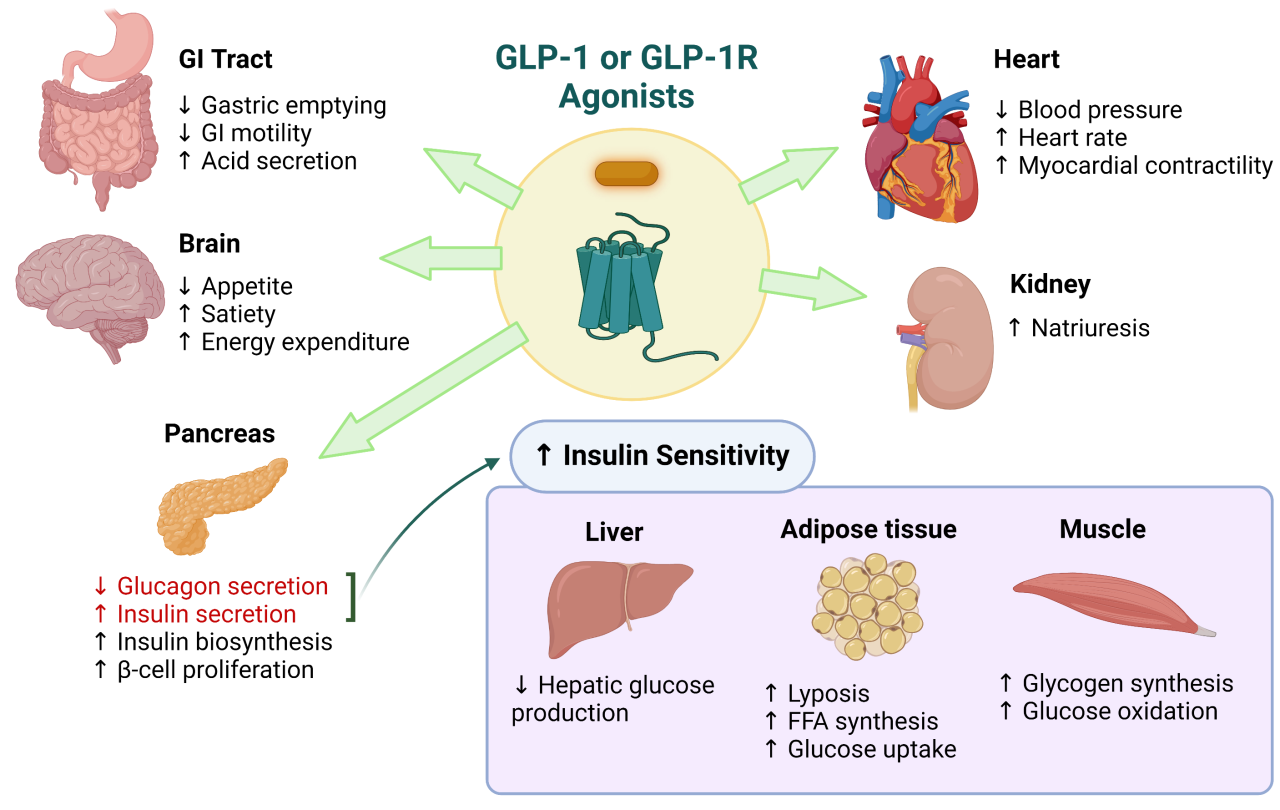
Common adverse effects of GLP-1 receptor agonists include nausea, vomiting, diarrhoea, and constipation, which occur in a significant proportion of patients, particularly during dose escalation
To understand how peptides function as signaling molecules within biological systems, see: How Peptides Work For a complete scientific overview of peptide biology and research systems, see: Ultimate Guide to Research Peptides Molecular Differences PEG-MGF and IGF-1 LR3 differ in structure, origin, and biological function
Dao et al., 2022c)
Your provider may need to adjust doses gradually to maintain safe blood pressure levels while accommodating the beneficial metabolic effects of tirzepatide
Anti-Actin (AA128, Beyotime), anti-GPR109a (ab81825, Abcam, USA), anti-GPR43 (DF2746, Affinity Biosciences, USA), anti-H3 (anti-total histone H3, 4499, Cell Signaling Technology, CST, USA), anti-Ace-H3 (anti-pan-acetyl histone H3, 61637, Active Motif, USA), anti-p-AMPK (2535, adenosine monophosphate activated protein kinase, CST, USA), anti-p-ACC (11818, p-acetyl-CoA carboxylase, CST), anti-IR (anti-insulin receptor, ab5500, Abcam), anti-IRS-1 (anti-insulin receptor substrate-1, ab46800, Abcam), and anti-GLP-1R (NBP1-97308, Novus Biologicals, USA) were used in our study